Loading Results...
Back to quiz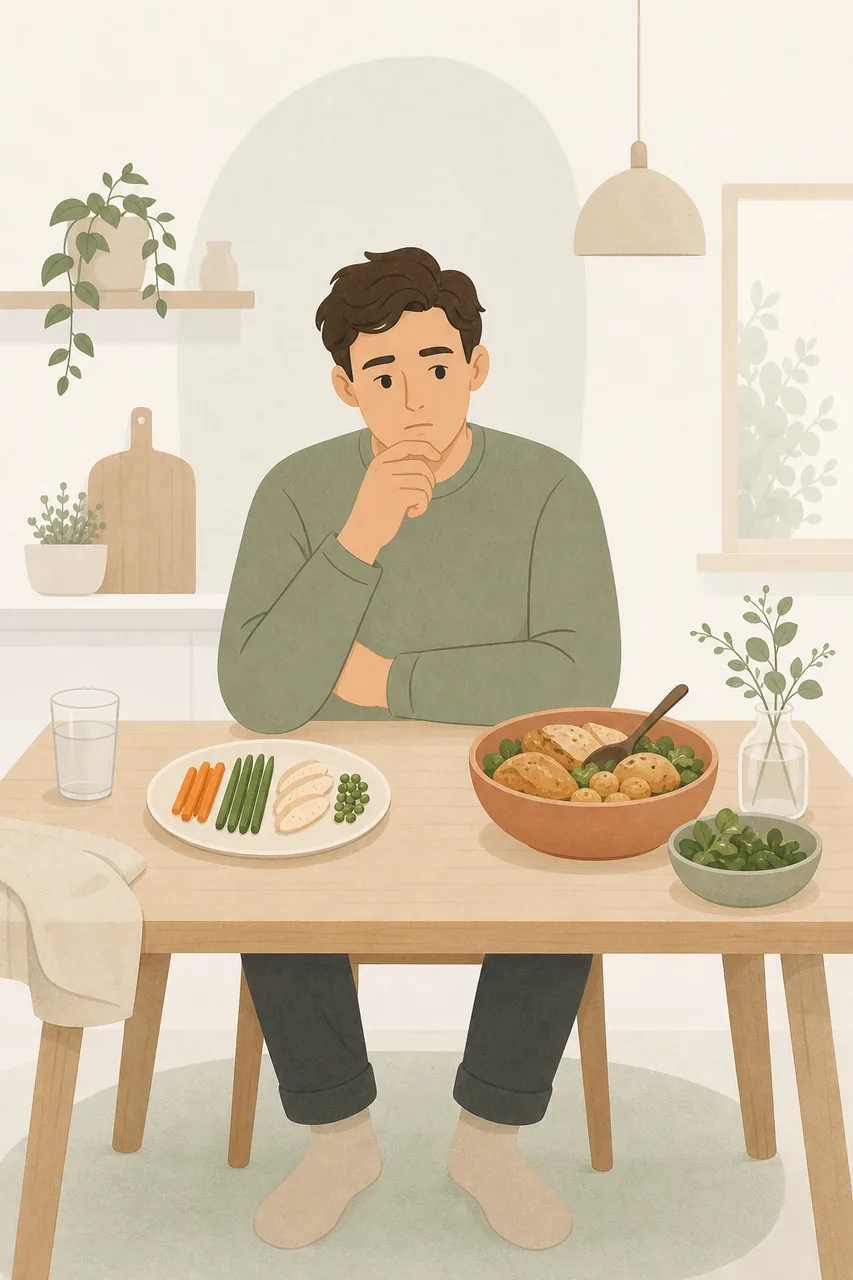
Your primary eating pattern is:
The Restrictive Eater
Overview
If this sounds like you
If you are The Restrictive Eater, eating may feel less like nourishment and more like a negotiation with a very strict committee. You know the foods you are supposed to choose, the foods you are supposed to avoid, and the version of yourself you are trying to become. The exhausting part is that the rules can keep getting tighter until normal eating starts to feel suspicious.
This pattern can look disciplined from the outside, which is part of why it can be hard to question. You may be praised for control, consistency, or saying no. Inside, though, the mental load can be enormous.
At your best, you are thoughtful and goal-oriented. You want your choices to mean something. The problem begins when food rules start replacing body signals, pleasure, flexibility, and social ease.
When foods become morally loaded, eating stops being just eating. A meal prepared by someone else can feel risky. A normal craving can feel like a threat. A flexible choice can feel like evidence that you are losing control.
For The Restrictive Eater, progress is not about having no structure. It is about building structure that can bend without breaking you.
What drives it
The mechanism underneath
Food gets sorted into allowed, off-limits, clean, bad, safe, or risky. The more pressure the rules create, the more likely rebound eating becomes.
Why this happens
Rules create a sense of safety when food or body goals feel uncertain.
Good-food and bad-food thinking can make ordinary choices feel morally loaded.
Tight restriction builds pressure, and pressure often looks for a release valve later.
Common signs
You keep revising lists of foods that are allowed, risky, clean, bad, or off-limits.
Meals prepared by other people can feel stressful because you cannot control every detail.
You may restrict hard, then feel out of control when the pressure finally breaks.
Strengths & Weaknesses
What helps you, and where it can get in your way
What works in your favor
You care about your goals and you are willing to be intentional. That can be powerful when intention is not confused with punishment.
Where it can get in your way
The more stressful food becomes, the harder it is to trust yourself around it. Restriction can create the very rebound eating it was trying to prevent.
First steps
What to do with this result this week
The progress trap
The trap is mistaking tighter rules for better control. The more fragile the system gets, the more one flexible meal can feel like danger.
1
Choose one food rule to soften into a guideline instead of treating every rule as law.
2
Practice logging a meal you did not fully control without correcting it into perfection.
3
Build one flexible anchor meal that supports your goals without requiring moral judgment.
How Mindful helps
Start building a calmer food system
1
Keeps food visible without forcing every meal into a pass-fail system.
2
Helps you notice patterns and trends while leaving room for normal human meals.
3
Supports structure that feels useful, not punishing.
Next step
Work with your pattern, not against it
Your result is a starting point. The guide gives you a more practical way to work with this pattern without turning food into another full-time job.
Detailed guide
Unlock your detailed guide.
Get a deeper look at your eating pattern: what usually triggers it, what it may be doing for you, where it can get sticky, and how to start working with it in a calmer, more practical way.
A quick note
This quiz is for self-reflection, not diagnosis or medical advice. If food, tracking, weight, or eating patterns feel distressing or unsafe, consider working with a registered dietitian, clinician, or mental health professional.