Loading Results...
Back to quiz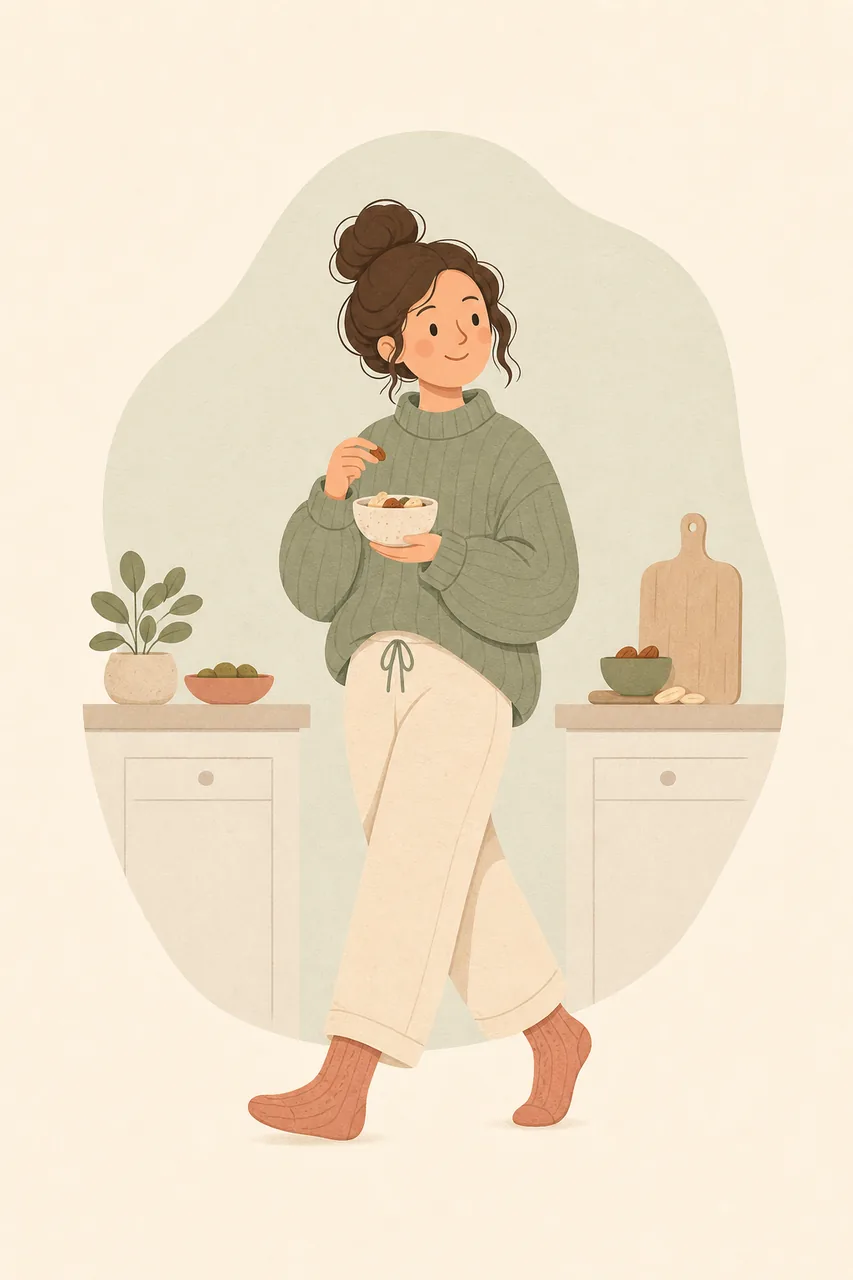
Your primary eating pattern is:
The Grazer
Overview
If this sounds like you
If you are The Grazer, you may not think of yourself as someone who eats a lot. In your mind, you are not sitting down to huge meals or having obvious binges. You are just having a handful here, a bite there, a taste while cooking, a snack because it was nearby, and then dinner because dinner still counts as dinner.
This pattern can feel almost unfair because no single moment looks like the problem. You did not sit down and decide to overeat. You just moved through a day where food was available, visible, and easy to fold into whatever else you were doing.
At your best, this flexibility can be a strength. You are probably not precious about perfect meal timing or rigid food rules, and you can adapt when the day changes. The trouble starts when flexible becomes shapeless. Eating begins to leak into every transition, and your brain stops registering where one eating moment ends and the next one begins.
That is why you can end the day feeling confused. You may remember breakfast, lunch, and dinner, but not the trail of small extras around them. The body counts all of it, even when the mind treats most of it as background noise.
For The Grazer, the goal is not to become strict or snack-free. It is to give eating cleaner edges so your choices feel visible again.
What drives it
The mechanism underneath
Eating without clear boundaries. Small amounts show up throughout the day, often because food is visible, available, or simply on the route between one room and another.
Why this happens
Food is visible, nearby, or bundled into transitions between tasks.
Small bites do not feel important enough to count, so they stay mentally invisible.
Meals may feel too formal or inconvenient, making loose snacking the default.
Common signs
You eat standing up, while passing through the kitchen, or while doing something else.
Dinner still happens even after a day of snacks because dinner feels like the official meal.
You remember the main meals but not all the small extras around them.
Strengths & Weaknesses
What helps you, and where it can get in your way
What works in your favor
You are flexible around food and probably not trapped by rigid meal rules. That can be a real strength when it is paired with awareness.
Where it can get in your way
The calories can add up without ever creating a clear memory of eating. You can end the day over target without one obvious meal to blame, which is rude of the snacks, frankly.
First steps
What to do with this result this week
The progress trap
Trying to fix grazing by banning snacks often backfires. The better move is making eating more intentional: fewer invisible bites, clearer meal moments, and snacks that are chosen instead of discovered.
1
Create one or two real eating windows where you sit down and make the food feel like a meal.
2
Log small bites as small bites for a few days, not to judge them, but to make the pattern visible.
3
Move easy-grab foods out of your default path so proximity stops making so many decisions for you.
How Mindful helps
Start building a calmer food system
1
Turns loose bites into visible entries so the pattern becomes easier to see.
2
Helps you notice whether you are hungry, bored, passing the kitchen, or just within arm's reach of crackers.
3
Makes meals feel more deliberate without asking you to become a person who meal-preps in matching containers.
Next step
Work with your pattern, not against it
Your result is a starting point. The guide gives you a more practical way to work with this pattern without turning food into another full-time job.
Detailed guide
Unlock your detailed guide.
Get a deeper look at your eating pattern: what usually triggers it, what it may be doing for you, where it can get sticky, and how to start working with it in a calmer, more practical way.
A quick note
This quiz is for self-reflection, not diagnosis or medical advice. If food, tracking, weight, or eating patterns feel distressing or unsafe, consider working with a registered dietitian, clinician, or mental health professional.