10 High-Protein Breakfast Ideas With at Least 30g Protein
Ten practical high-protein breakfast ideas that each hit at least 30g of protein, with realistic portions, quick prep notes, swaps, and rounded macro estimates.
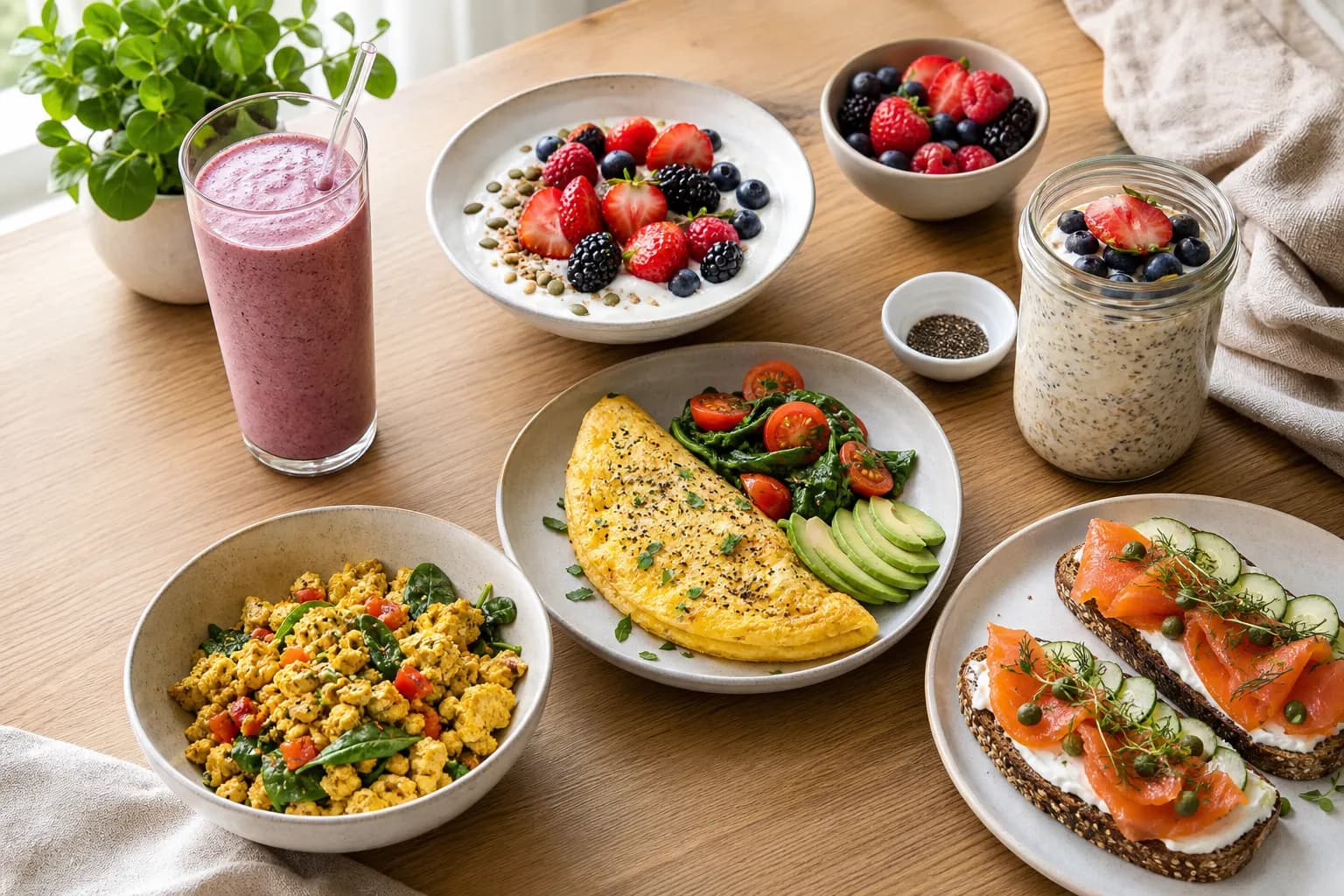
TL;DR. A solid high-protein breakfast does not have to be six egg whites and a sad piece of toast. The easiest way to hit 30g+ protein at breakfast is to anchor the meal with Greek yogurt, skyr, cottage cheese, eggs plus egg whites, tofu, tempeh, smoked salmon, turkey, beans, or protein powder. The 10 breakfasts below all land around 30-50g protein, use normal grocery-store ingredients, and include enough variety that you can rotate sweet, savory, vegetarian, vegan, meal-prep, and quick options without eating the same bowl every morning.
Breakfast is where many people accidentally miss their daily protein target. Cereal, toast, fruit, coffee, and pastries can all fit a healthy diet, but they usually do not contribute much protein. That means the rest of the day has to work harder. A 30g breakfast gives you a head start, improves satiety for many people, and makes a daily target like 100-150g feel less like a dinner emergency.
The meals below were built with the same two filters I use with clients: does the protein math actually work, and would a normal person make this on a weekday? Nutrition values are rounded estimates from USDA FoodData Central-style entries and common product labels, so your exact numbers will vary by brand, portion size, and cooking method1.
A note before reading. This article is general nutrition education, not medical advice. If you have kidney disease, are pregnant or nursing, have a current or past eating disorder, or have a medical condition that changes your protein needs, work with a registered dietitian or physician before deliberately increasing protein. A high-protein breakfast can be useful, but it is not a moral upgrade over every other breakfast.
What counts as a high-protein breakfast?
For this article, every breakfast had to meet three rules:
- At least 30g protein using realistic portions
- Foods people can actually buy and prepare without specialty cooking
- Enough carbs, fiber, fruit, vegetables, or fat to feel like breakfast, not just a protein calculation
There is no magic to 30g specifically. Research on protein and training commonly supports higher total daily protein intakes for active adults, often around 1.6-2.2 g/kg/day when the goal is muscle retention, strength, or body composition23. Protein distribution research also suggests that spreading protein across meals is useful for many people, especially when total daily intake is adequate4.
In normal life, 30g is simply a practical threshold. It is high enough to meaningfully contribute to the day, but not so high that breakfast has to become a giant steak.
Quick comparison
| Breakfast | Protein | Best for |
|---|---|---|
| Greek yogurt protein bowl | ~45g | No-cook sweet breakfast |
| Egg, cottage cheese, and veggie scramble | ~40g | Warm vegetarian breakfast |
| Protein overnight oats | ~50g | Meal prep |
| Smoked salmon breakfast toast plate | ~38g | Savory, no-cook-ish option |
| Turkey sausage egg wrap | ~43g | Grab-and-go |
| Tofu black bean scramble | ~34g | Vegan savory breakfast |
| Tempeh breakfast hash | ~34g | Vegan meal prep |
| Cottage cheese protein pancakes | ~43g | Weekend-style breakfast |
| Breakfast burrito with eggs and beans | ~35g | Freezer-friendly |
| Vegan protein smoothie bowl | ~37g | Fast plant-based breakfast |
1. Greek yogurt protein bowl
~430 calories, 45g protein, 45g carbs, 10g fat
Ingredients
- 1 1/2 cups plain nonfat Greek yogurt
- 1/2 scoop vanilla or unflavored protein powder
- 1 cup berries
- 1 tablespoon chia seeds
- 1 tablespoon chopped walnuts or pumpkin seeds
- Cinnamon or vanilla extract
How to make it
Stir the protein powder into the yogurt first so it does not clump. Add berries, chia seeds, nuts or seeds, and cinnamon.
Why it works
Greek yogurt does most of the heavy lifting. The protein powder pushes the bowl comfortably over 30g without needing a huge serving, while berries and chia add fiber and volume. If you dislike protein powder, use 2 cups Greek yogurt instead and keep the toppings the same.
2. Egg, cottage cheese, and veggie scramble
~420 calories, 40g protein, 20g carbs, 15g fat
Ingredients
- 2 large eggs
- 1/2 cup liquid egg whites
- 1/2 cup low-fat cottage cheese
- 1 cup spinach, peppers, mushrooms, or zucchini
- 1 slice whole-grain toast
- Salsa, hot sauce, salt, and pepper
How to make it
Scramble the eggs and egg whites with vegetables. When the eggs are mostly set, fold in cottage cheese for the last 30-60 seconds. Serve with toast and salsa.
Why it works
Whole eggs bring flavor and staying power, egg whites add lean protein, and cottage cheese makes the scramble creamy. This is a good option for people who want a warm breakfast but do not want to eat four whole eggs.
3. Protein overnight oats
~485 calories, 50g protein, 58g carbs, 10g fat
Ingredients
- 1/2 cup rolled oats
- 3/4 cup plain Greek yogurt or skyr
- 1 scoop protein powder
- 1/2 cup milk, soy milk, or almond milk
- 1/2 cup berries or sliced banana
- 1 tablespoon chia seeds
How to make it
Stir everything together in a jar or container. Refrigerate overnight. Add a splash of milk in the morning if it is too thick.
Why it works
Oats alone are not a high-protein breakfast. Oats plus Greek yogurt and protein powder are. This is the easiest meal-prep option on the list because you can make 2-3 jars at once and change the flavor with fruit, cinnamon, cocoa powder, or peanut butter powder.
4. Smoked salmon breakfast toast plate
~420 calories, 38g protein, 40g carbs, 10g fat
Ingredients
- 2 slices whole-grain toast
- 3 oz smoked salmon
- 1/2 cup low-fat cottage cheese or plain Greek yogurt
- Cucumber, tomato, red onion, capers, dill, and lemon
- Optional: 1 hard-boiled egg if you need extra protein
How to make it
Spread cottage cheese or Greek yogurt over toast. Top with smoked salmon, cucumber, tomato, onion, capers, dill, and lemon. Add the egg on the side if your salmon portion is smaller.
Why it works
This feels like brunch but takes five minutes. The caveat is sodium: smoked salmon is often salty. Keep it in rotation, not as your only breakfast protein, and balance the day with lower-sodium meals.
5. Turkey sausage egg wrap
~500 calories, 43g protein, 38g carbs, 22g fat
Ingredients
- 1 high-protein tortilla or whole-wheat wrap
- 2 eggs
- 1/3 cup liquid egg whites
- 2 turkey sausage links or 2 oz cooked turkey sausage
- 1 oz part-skim mozzarella or cheddar
- Spinach, peppers, or salsa
How to make it
Cook the turkey sausage. Scramble the eggs, egg whites, and vegetables. Add cheese, wrap everything in the tortilla, and toast it in a dry skillet for 1-2 minutes per side.
Why it works
The wrap format is practical for busy mornings. The main nutrition watchout is that sausage and high-protein tortillas vary wildly by brand, so check labels. Choose turkey sausage you like, but do not assume every "turkey" product is automatically lean.
6. Tofu black bean scramble
~460 calories, 34g protein, 45g carbs, 18g fat
Ingredients
- 7 oz extra-firm tofu, drained and crumbled
- 1/2 cup black beans, rinsed
- 1 tablespoon nutritional yeast
- 1 cup peppers, onions, spinach, or mushrooms
- 1 teaspoon olive oil
- Turmeric, cumin, garlic powder, salt, and pepper
- Salsa or hot sauce
How to make it
Cook vegetables in olive oil until softened. Add crumbled tofu, black beans, nutritional yeast, and spices. Cook 5-7 minutes until hot and lightly browned. Serve with salsa.
Why it works
This is the vegan breakfast that actually clears 30g without pretending avocado or toast are protein foods. Tofu and beans provide the base, nutritional yeast adds flavor, and vegetables make it feel like a full meal.
7. Tempeh breakfast hash
~535 calories, 34g protein, 52g carbs, 22g fat
Ingredients
- 5 oz tempeh, diced
- 1 small potato, diced
- 1 cup peppers, onions, mushrooms, or spinach
- 1 teaspoon olive oil
- 2 tablespoons salsa or hot sauce
- 2 tablespoons nutritional yeast
How to make it
Microwave the diced potato for 3-4 minutes to soften it. Brown tempeh and vegetables in olive oil, then add the potato and cook until crisp at the edges. Season with paprika, garlic powder, salt, pepper, and salsa.
Why it works
Tempeh is more protein-dense than most whole-food plant proteins and holds up well for meal prep. The extra ounce of tempeh plus nutritional yeast keeps this over 30g without a supplement. Make two servings at once and reheat in a skillet. If you need more protein, add edamame on the side or use a higher-protein tempeh brand.
8. Cottage cheese protein pancakes
~480 calories, 43g protein, 50g carbs, 14g fat
Ingredients
- 1/2 cup low-fat cottage cheese
- 2 eggs
- 1/2 cup rolled oats
- 1/2 scoop vanilla protein powder
- 1/2 teaspoon baking powder
- Cinnamon
- 1/2 cup berries for topping
How to make it
Blend cottage cheese, eggs, oats, protein powder, baking powder, and cinnamon until smooth. Cook small pancakes on a nonstick skillet over medium heat. Top with berries.
Why it works
This gives you the pancake experience with far more protein than a standard pancake mix. Keep the pancakes small so they are easier to flip, and use a nonstick pan. If the batter gets too thick, add a splash of milk.
9. Breakfast burrito with eggs and beans
~540 calories, 35g protein, 52g carbs, 22g fat
Ingredients
- 1 large whole-wheat tortilla
- 2 eggs
- 1/2 cup black beans or pinto beans
- 1 oz shredded cheese
- 1/4 avocado
- Peppers, onions, spinach, or salsa
- Optional: 1/4 cup egg whites if you want closer to 40g protein
How to make it
Scramble the eggs with vegetables. Warm the beans. Add everything to the tortilla with cheese, avocado, and salsa. Roll tightly and toast seam-side down in a skillet.
Why it works
Eggs plus beans plus cheese can reach the 30g range without meat. For a freezer version, skip avocado and fresh salsa, wrap the burrito in foil, and reheat later. Add avocado after reheating.
10. Vegan protein smoothie bowl
~440 calories, 37g protein, 52g carbs, 10g fat
Ingredients
- 1 scoop plant protein powder
- 1 cup unsweetened soy milk
- 1 frozen banana
- 1/2 cup frozen berries
- 1 tablespoon peanut butter powder or hemp seeds
- 1 tablespoon chia seeds
- Ice as needed
How to make it
Blend protein powder, soy milk, banana, berries, and ice until thick. Pour into a bowl and top with chia seeds and peanut butter powder or hemp seeds.
Why it works
Smoothies are only high protein when the protein source is deliberate. Soy milk and plant protein powder do the main work here. Peanut butter, hemp, and chia add useful nutrients, but they are add-ons, not the primary protein source.
Easy swaps to hit 30g
If your favorite breakfast is close but not quite there, use one of these add-ons:
| Add-on | Extra protein | Best use |
|---|---|---|
| 1/2 cup egg whites | ~13g | Scrambles, wraps, oats |
| 3/4 cup Greek yogurt | ~18g | Bowls, pancakes, side dish |
| 1/2 cup cottage cheese | ~13g | Eggs, toast, pancakes |
| 1 scoop whey or plant protein | ~20-25g | Oats, smoothies, yogurt |
| 3 oz smoked salmon | ~15-18g | Toast, breakfast plate |
| 1/2 cup beans | ~7-8g | Burritos, scrambles, hashes |
| 4 oz tofu | ~10-12g | Scrambles, bowls |
| 4 oz tempeh | ~20g | Hashes, savory bowls |
The big pattern: add a real protein source first, then use nuts, seeds, avocado, and oils for flavor and satisfaction. Those foods can be healthy, but they are too calorie-dense to be the main reason a meal hits 30g protein.
How to choose the right breakfast
If you are always rushed: make overnight oats, a yogurt bowl, or a freezer burrito.
If you get hungry two hours after breakfast: pick the scramble, burrito, tempeh hash, or turkey sausage wrap. They bring more fat and chew than a smoothie.
If you prefer sweet breakfasts: use Greek yogurt, overnight oats, protein pancakes, or a smoothie bowl.
If you prefer savory breakfasts: use eggs, tofu, tempeh, smoked salmon, beans, or turkey.
If you are vegan: start with tofu, tempeh, soy milk, beans, and plant protein powder. Do not rely on almond milk, chia pudding, avocado toast, or nut butter alone to hit 30g.
Frequently asked questions
Is 30g of protein too much for breakfast?
For most healthy adults, no. A 30g breakfast is a normal-sized protein feeding, especially if your daily target is 100g or more. People with kidney disease or medical protein restrictions should follow clinician guidance.
Do I need protein powder?
No. Greek yogurt, cottage cheese, eggs, egg whites, tofu, tempeh, salmon, turkey, and beans can all work. Protein powder is useful for oats, smoothies, yogurt bowls, and busy mornings because it fills the protein gap quickly.
Are eggs enough for a high-protein breakfast?
Two eggs have about 12g protein. That is nutritious, but it is not a 30g breakfast by itself. Add egg whites, cottage cheese, Greek yogurt, beans, smoked salmon, turkey, tofu, or a higher-protein side.
What is the best high-protein breakfast for weight loss?
The best one is the breakfast that keeps you full and fits your calorie target. For many people, that means Greek yogurt with berries, eggs plus egg whites and vegetables, tofu scramble, or overnight oats with protein powder. If weight loss is the goal, watch calorie-dense add-ons like oils, nut butter, granola, cheese, and avocado.
Can a plant-based breakfast hit 30g protein?
Yes, but it needs planning. Tofu, tempeh, soy milk, beans, seitan, edamame, and plant protein powder are the practical anchors. Nuts and seeds help, but they usually cannot carry the whole protein target without adding a lot of calories.
Where Mindful fits
High-protein breakfasts are simple once you know the pattern, but the numbers still vary by brand. A tortilla might have 6g protein or 15g. Greek yogurt might have 15g per cup or 25g. Protein powder scoops are not all the same size.
Mindful helps by making the protein target visible while you log meals. Save your usual breakfast bowl, scan labels for tortillas or yogurt, and adjust portions when your actual brand differs from the estimate. The point is not to turn breakfast into homework. It is to make the invisible part visible enough that your meals actually add up.
References
Footnotes
-
U.S. Department of Agriculture, Agricultural Research Service. FoodData Central. Used as the baseline source for rounded ingredient nutrition estimates. USDA FoodData Central ↩
-
Morton RW, Murphy KT, McKellar SR, Schoenfeld BJ, Henselmans M, Helms E, Aragon AA, Devries MC, Banfield L, Krieger JW, Phillips SM. "A systematic review, meta-analysis and meta-regression of the effect of protein supplementation on resistance training-induced gains in muscle mass and strength in healthy adults." British Journal of Sports Medicine 52(6):376-384. March 2018. DOI ↩
-
Jager R, Kerksick CM, Campbell BI, et al. "International Society of Sports Nutrition Position Stand: protein and exercise." Journal of the International Society of Sports Nutrition 14:20. June 2017. DOI ↩
-
Schoenfeld BJ, Aragon AA. "How much protein can the body use in a single meal for muscle-building? Implications for daily protein distribution." Journal of the International Society of Sports Nutrition 15:10. February 2018. DOI ↩