Healthier Candy and Chocolate Choices: Whole-Food Swaps for Popular Candy Bars
A practical candy and chocolate guide for weight loss: what to eat instead of Snickers, Reese's, Twix, Hershey's, M&M's, Almond Joy, Skittles, and Starburst when you want a whole-food alternative.
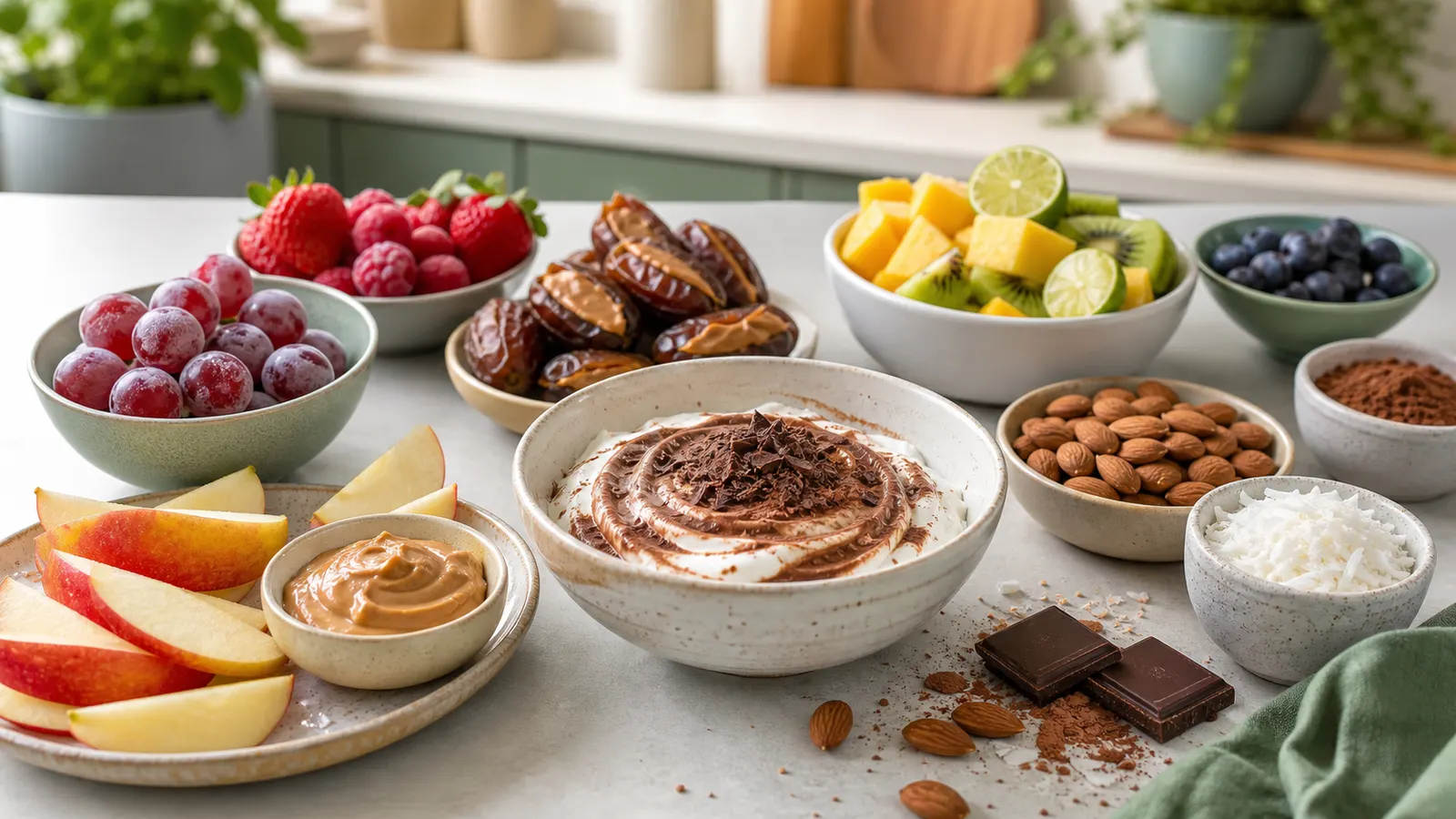
TL;DR. The best candy swap is not the smallest version of the same candy. It is the snack that answers the same craving with fewer calories, more protein, more fiber, or better staying power. If you usually reach for a Snickers, apple slices with a cottage cheese, peanut butter, and cocoa dip give you the same sweet-salty-peanut direction with more protein and fiber than a 250-calorie candy bar built mostly around added sugar and fat1.
Candy is tricky because the package is usually small, fast, and easy to mentally file as "just a snack." But a candy bar often behaves more like dessert than fuel. That does not mean candy is banned. It means the better everyday alternative is usually not a fun-size version, a sugar-free candy, or a protein-bar copycat. It is a whole-food snack that gives you a clearer macro trade: usually fewer calories, more protein, more fiber, or more volume for the same craving.
This guide uses U.S. product nutrition labels for the candy side and typical USDA/common-label estimates for the whole-food alternatives. Treat the numbers as planning estimates. The exact calories will vary with apple size, cottage cheese brand, kefir brand, peanut butter spoon, fruit ripeness, and whether you measure like a person or like a lab technician2.
A note before reading. This article is general nutrition education, not medical advice. If calorie counting, candy, or "good vs. bad" food decisions trigger anxiety or restrictive patterns for you, use this as loose snack literacy rather than a rulebook. The goal is a calmer craving plan, not a stricter relationship with food.
Quick picks
These are not universal "healthiest" snacks. Each row starts with a popular candy or chocolate choice, then gives a whole-food alternative that usually fits a weight-loss day more easily. None of the swaps are just the mini version of the same candy.
| What you might eat | Whole-food alternative | Why it can fit better |
|---|---|---|
| Snickers | Apple slices with cottage cheese, peanut butter, and cocoa dip | Same sweet-salty-peanut lane, but lower calorie, higher protein, higher fiber, and less added sugar than a 250-calorie bar1. |
| Reese's Peanut Butter Cups | Greek yogurt, cocoa, berries, and measured peanut butter | Keeps the chocolate-peanut-butter idea while making protein the base and peanut butter the accent3. |
| Twix | Part-skim ricotta with apple, cocoa, and chopped date | Date gives the caramel-chewy cue; ricotta adds creaminess and protein; apple adds crunch and volume4. |
| Hershey's Milk Chocolate Bar | Silken tofu chocolate mousse with berries | More protein, less fat, less added sugar, and still clearly chocolate-sweet rather than "just fruit"5. |
| M&M's | Frozen blueberries with cocoa cottage cheese dip | Keeps the poppable snack pattern while adding protein and usually staying below a measured 1 oz serving6. |
| Almond Joy | Part-skim ricotta with cocoa, coconut, and chopped almonds | Coconut-almond-chocolate flavor with more protein and a lower-calorie bowl format7. |
| Skittles | Frozen grapes and berries with lime plus string cheese | Same bright fruity direction, fewer calories, more volume, and actual protein compared with a 250-calorie single pack8. |
| Starburst | Mango, kiwi, and pineapple with lime kefir | Sweet, tangy fruit gives the fruity hit while kefir adds protein and keeps calories lower9. |
Calorie and macro comparison
The table below compares common candy servings with practical whole-food alternatives. These defaults are built to be more macro-friendly, not just more "natural": each one is lower calorie and higher protein than the candy serving, with fruit or berries adding more volume and fiber. The alternative estimates assume the example portions written in the row. Nuts, nut butter, coconut, and dates are still useful, but they are measured as flavor accents because they can erase the calorie gap quickly.
| Candy choice | Calories and macros | Whole-food alternative | Approximate calories and macros |
|---|---|---|---|
| Snickers Singles Size, 1.86 oz | 250 cal, 5g protein, 32g carbs, 12g fat | Small apple + 1/2 cup low-fat cottage cheese + 1 tsp peanut butter + 1 tsp cocoa | ~205 cal, 15g protein, 28g carbs, 6g fat |
| Reese's Peanut Butter Cups, 1.5 oz | 210 cal, 4g protein, 24g carbs, 12g fat | 3/4 cup nonfat Greek yogurt + 2 tsp peanut butter + cocoa + 1/4 cup berries | ~190 cal, 21g protein, 14g carbs, 6g fat |
| Twix Full Size, 1.79 oz | 250 cal, 2g protein, 34g carbs, 12g fat | 1/3 cup part-skim ricotta + 1/2 small apple + 1/2 date + cocoa | ~185 cal, 10g protein, 26g carbs, 7g fat |
| Hershey's Milk Chocolate Bar, 1.55 oz | 220 cal, 3g protein, 26g carbs, 13g fat | Silken tofu + cocoa + raspberries + 1/4 banana | ~160 cal, 10g protein, 19g carbs, 6g fat |
| M&M's Milk Chocolate, 1 oz | 140 cal, 1g protein, 21g carbs, 5g fat | 1/2 cup frozen blueberries + 1/3 cup low-fat cottage cheese + cocoa | ~105 cal, 10g protein, 15g carbs, 2g fat |
| Almond Joy, 1.61 oz | 230 cal, 2g protein, 27g carbs, 13g fat | 1/3 cup part-skim ricotta + cocoa + 2 tsp coconut + 2 tsp almonds | ~180 cal, 12g protein, 11g carbs, 12g fat |
| Skittles Original, 2.17 oz | 250 cal, 0g protein, 56g carbs, 2.5g fat | 1/2 cup frozen grapes + 1/2 cup berries + lime + string cheese | ~165 cal, 8g protein, 24g carbs, 6g fat |
| Starburst Original Fruit Chews, 2.07 oz | 240 cal, 0g protein, 49g carbs, 5g fat | 3/4 cup mango/kiwi/pineapple + lime + 3/4 cup low-fat kefir | ~160 cal, 8g protein, 29g carbs, 2g fat |
Instead of a Snickers
A Snickers Singles Size bar is 250 calories, 32g carbs, 12g fat, and 5g protein1. It has peanuts, but the main experience is candy: milk chocolate, caramel, nougat, and added sugar.
The whole-food swap is apple slices with a cottage cheese, peanut butter, and cocoa dip. Blend 1/2 cup low-fat cottage cheese with 1 teaspoon of peanut butter, unsweetened cocoa powder, cinnamon, and a pinch of salt until it turns smooth. Use a small apple as the dipper. It is not a candy bar clone. It is a better answer to the same sweet-salty-peanut craving.
The key upgrade is the macro mix. A whole apple takes longer to eat than a candy bar and brings fiber and water. The cottage cheese adds the protein the candy bar is missing. The peanut butter gives the peanut note, but keeping it to a measured teaspoon keeps the swap clearly lower in fat and calories than the bar.
Instead of Reese's Peanut Butter Cups
A 1.5 oz pack of Reese's Peanut Butter Cups is 210 calories, 24g carbs, 12g fat, and 4g protein3. It tastes like peanut butter, but it is still more candy than peanut butter snack.
The better everyday alternative is a Greek yogurt, peanut butter, cocoa, and berry bowl. Stir 3/4 cup plain nonfat Greek yogurt with cocoa powder, cinnamon, and 2 teaspoons of peanut butter, then add 1/4 cup berries for sweetness.
This swap works because it keeps the chocolate-peanut-butter flavor while changing the structure of the snack. The yogurt brings most of the calories from protein, the peanut butter brings the flavor you actually wanted, and the cocoa keeps it dessert-like without turning the snack into another candy product.
Instead of Twix
A Twix Full Size bar is 250 calories, 34g carbs, 12g fat, and 2g protein for the two-cookie serving4. Twix is satisfying because it combines crunch, caramel chew, and chocolate. The problem is that it does not do much hunger work afterward.
The whole-food swap is part-skim ricotta with apple slices, cocoa, and a chopped half date. Use about 1/3 cup ricotta, 1/2 small apple, and 1/2 Medjool date. The date covers the caramel-chewy part. Apple gives crunch and volume without needing a cookie layer. Ricotta adds a creamy dessert texture and more protein than Twix brings.
If you want it more chocolate-like, dust the bowl with cocoa powder. If you want it sweeter, use the full date and accept the extra calories. The macro-friendly default is half a date, more apple, and a protein base. The point is not to pretend a date is a Twix. The point is to use whole foods to cover the part of the craving that made the Twix appealing without matching the candy bar's fat-and-sugar profile.
Instead of a Hershey's Milk Chocolate Bar
A Hershey's Milk Chocolate Bar is 220 calories, 26g carbs, 13g fat, and 3g protein5. It is simple, classic chocolate, but it is easy to eat quickly and still want something else.
The whole-food alternative is silken tofu chocolate mousse with berries. Blend silken tofu with unsweetened cocoa powder, vanilla, 1/2 cup raspberries, and about 1/4 banana for sweetness. Chill it for a few minutes so the texture firms up.
This is one of the clearest "better fit" swaps because the snack becomes more filling without losing the chocolate signal. Berries add sweetness and fiber. Silken tofu adds protein and creaminess. Cocoa gives the chocolate taste without the bar format that disappears in a minute.
Instead of M&M's
The official M&M's Milk Chocolate label uses a 1 oz serving, which is 140 calories, 21g carbs, 5g fat, and 1g protein6. A single movie-theater or desk-snacking pour can easily become more than one serving because M&M's are built for repeated handfuls.
The whole-food swap is frozen blueberries with cocoa cottage cheese dip. Use 1/2 cup frozen blueberries and blend about 1/3 cup low-fat cottage cheese with cocoa. The blueberries give you cold, sweet, poppable pieces. Blended cottage cheese with cocoa adds a chocolate direction and enough protein to make the snack behave more like food than candy.
This is a better default than pairing fruit with a large handful of nuts, because a precise 1 oz serving of M&M's is only 140 calories. Nuts can be useful, but they make it too easy for the "healthier" swap to become higher calorie than the candy. If you want crunch, add 1 teaspoon of chopped almonds rather than a loose handful.
Instead of Almond Joy
An Almond Joy bar is 230 calories, 27g carbs, 13g fat, and 2g protein7. Coconut and almond are doing the interesting flavor work, but the finished bar is still mostly a candy structure.
A better-fit bowl is part-skim ricotta with cocoa powder, unsweetened shredded coconut, and chopped almonds. Use about 1/3 cup ricotta with 2 teaspoons each of coconut and almonds. The flavor cues are familiar: coconut, almond, chocolate. The texture is different, but the snack has more protein and takes longer to eat.
Use the coconut and almonds as toppings, not the base. A teaspoon or two of each gives the Almond Joy direction while keeping the ricotta responsible for most of the fullness. This is especially useful when you want dessert after dinner but do not want a candy bar to be the thing that reopens the kitchen.
Instead of Skittles
A 2.17 oz pack of Skittles Original is 250 calories, 56g carbs, 2.5g fat, and 0g protein8. It is basically a fruity added-sugar snack with very little satiety.
The whole-food swap is frozen grapes and berries with lime, plus a part-skim string cheese on the side. Use 1/2 cup frozen grapes, 1/2 cup berries, and lime for the bright sour edge. The string cheese is not meant to taste like Skittles; it is the protein anchor that keeps the fruit bowl from behaving like another pure-sugar snack.
This is the easiest fruity-candy swap because frozen fruit slows you down. It also gives you a full bowl for fewer calories than a single pack of candy, while the cheese makes the snack more useful if you were actually hungry.
Instead of Starburst
A 2.07 oz pack of Starburst Original Fruit Chews is 240 calories, 49g carbs, 5g fat, and 0g protein9. The appeal is not protein or fullness. It is chewy, fruity, sweet, and a little tart.
The whole-food swap is mango, kiwi, and pineapple with lime kefir. Cut about 3/4 cup fruit into small cubes, squeeze lime over it, and serve it with 3/4 cup plain low-fat kefir or pour the kefir over the fruit like a loose smoothie bowl. Mango gives the soft chew, pineapple gives the sharp sweetness, kiwi brings the tart edge, and kefir adds the protein Starburst does not have.
If you want a sour-candy direction, add extra lime or a tiny pinch of chili-lime seasoning. Just watch the sodium if that matters for you medically.
Where candy snacks get away from you
The package is small, so the calories feel small. A full candy bar can be 200 to 250 calories, which is normal for dessert but easy to underestimate as a "quick snack."
Candy has very little satiety per calorie. Most candy is low in protein and fiber. It can satisfy a taste craving, but it rarely solves actual hunger for long.
Poppable candy removes natural stopping points. M&M's, Skittles, Starburst, gummies, and mini candies are easy to keep eating because each piece feels too small to count.
Protein candy is still candy. A protein-bar version can be useful in a pinch, but it is not automatically a whole-food alternative. If the goal is calmer everyday snacking, fruit plus a simple protein anchor usually does more work.
"Sugar-free" can create a different problem. Sugar-free candy may reduce sugar, but it can still be easy to overeat and may cause digestive discomfort for some people. It is not the default swap in this guide.
For a broader snack framework, see our guide to healthy snacks under 200 calories.
How to build a better candy alternative
Use this order of operations:
- Name the craving accurately. Chocolate, peanut butter, caramel, fruity, sour, chewy, crunchy, or cold are different cravings.
- Start with fruit plus a protein anchor. Fruit solves sweet volume. Cottage cheese, ricotta, Greek yogurt, silken tofu, kefir, or string cheese make the snack more filling.
- Add the smallest useful amount of fat. Peanut butter, almond butter, almonds, coconut, and nuts make snacks satisfying, but they climb fast.
- Use cocoa for chocolate flavor. Unsweetened cocoa powder is the easiest way to make cottage cheese, ricotta, tofu, berries, apples, or a measured spoon of nut butter taste more chocolate-like without turning the snack into a candy bar.
- Put it in a bowl or on a plate. Candy eaten from a bag is hard to track. A plated alternative gives the snack a beginning and an end.
Here are a few practical builds:
| Craving | Whole-food build | Approximate planning calories |
|---|---|---|
| Chocolate pudding | Silken tofu + cocoa + raspberries | 140-170 |
| Peanut butter cup | Greek yogurt + cocoa + measured peanut butter | 170-200 |
| Caramel chew | Part-skim ricotta + apple + chopped date + cocoa | 160-200 |
| Sweet and crunchy | Apple + cottage cheese peanut-cocoa dip | 190-220 |
| Poppable candy | Frozen blueberries + cocoa cottage cheese dip | 120-150 |
| Fruity candy | Frozen grapes + berries + lime + string cheese | 150-180 |
| Coconut chocolate | Part-skim ricotta + cocoa + coconut + chopped almonds | 180-210 |
None of these snacks are magic. They are just more likely to help you feel done than a candy bar chosen on autopilot.
How to log candy and candy alternatives without overthinking it
Candy is easy to track when the label is clear. Whole-food alternatives take a little more estimating, but they are still manageable.
Log the candy by exact product and serving. "Snickers Singles Size, 1.86 oz" is better than "chocolate bar." "M&M's, 1 oz" is better than "a few handfuls."
For whole-food swaps, log the calorie-dense pieces first. Peanut butter, almond butter, almonds, coconut, dates, ricotta, cottage cheese, and kefir matter more than whether the apple was medium or large.
Do not chase perfect fruit math. If your berries or grapes are a little more or less than planned, estimate and move on. The useful signal is the pattern, not a courtroom transcript of every grape.
Keep candy visible, not forbidden. If you choose the candy, log it as dessert and enjoy it. If you choose the alternative, plate it like a real snack. The less sneaky the decision feels, the easier it is to repeat.
That is where a food journal helps: not as a scolding device, but as a record. A candy craving that is logged honestly is much easier to fit into a week than one that disappears because it felt too small to count.
Frequently asked questions
What is a healthier alternative to candy?
A healthier candy alternative usually combines a sweet whole food with protein, fiber, or a measured amount of fat. Good defaults include apple with a cottage cheese peanut-cocoa dip, Greek yogurt with cocoa and measured peanut butter, silken tofu chocolate mousse with berries, frozen blueberries with cocoa cottage cheese, or fruit with kefir.
Are dark chocolate or protein bars healthier than candy?
They can be better fits, but they are not the default in this guide because the goal is whole-food alternatives. Dark chocolate can still be calorie dense, and protein bars can still behave like candy with added protein. Use them when they solve a real need, not because the label sounds healthier.
What should I eat when I crave sour candy?
Try frozen grapes, berries, kiwi, mango, pineapple, lime juice, or a small amount of chili-lime seasoning. The tartness and cold texture can scratch the sour-candy itch with more volume and less added sugar. If you are actually hungry, pair the fruit with kefir, cottage cheese, or string cheese so the snack has some protein.
More snack guides
For more snack ideas, see healthy snacks under 200 calories, how to stop late-night snacking, and hunger vs. cravings.
References
Footnotes
-
Mars Wrigley. "SNICKERS Singles Size Chocolate Candy Bars, 1.86 oz." The official product page lists one bar at 250 calories, 32g carbohydrates, 12g total fat, and 5g protein. Source ↩ ↩2 ↩3
-
Whole-food alternative nutrition values are approximate planning estimates from USDA FoodData Central entries and common U.S. labels for apples, grapes, berries, mango, kiwi, pineapple, dates, peanut butter, almonds, Greek yogurt, cottage cheese, ricotta, kefir, tofu, string cheese, coconut, and cocoa powder. Exact values vary by brand, fat percentage, and portion size. USDA FoodData Central ↩
-
The Hershey Company. "REESE'S Milk Chocolate Peanut Butter Cups, 1.5 oz." Hersheyland lists one package at 210 calories, 24g carbohydrates, 12g total fat, and 4g protein. Source ↩ ↩2
-
Mars Wrigley. "TWIX Caramel Full Size Candy Bar, 1.79oz." The official product page lists a serving of two cookies at 250 calories, 34g carbohydrates, 12g total fat, and 2g protein. Source ↩ ↩2
-
The Hershey Company. "HERSHEY'S Milk Chocolate Candy Bar, 1.55 oz." Hersheyland lists one bar at 220 calories, 26g carbohydrates, 13g total fat, and 3g protein. Source ↩ ↩2
-
Mars Wrigley. "M&M'S Milk Chocolate, 10.0oz." The official M&M's product page includes a back-of-package nutrition panel listing one 1 oz serving at 140 calories, 21g carbohydrates, 5g total fat, and 1g protein. Source ↩ ↩2
-
The Hershey Company. "ALMOND JOY Coconut and Almond Chocolate Candy Bar, 1.61 oz." Hersheyland lists one package at 230 calories, 27g carbohydrates, 13g total fat, and 2g protein. Source ↩ ↩2
-
Mars Wrigley. "SKITTLES Original Fruity Candy Single Pack, 2.17 oz." The official product page lists one package at 250 calories, 56g carbohydrates, 2.5g total fat, and 0g protein. Source ↩ ↩2
-
Mars Wrigley. "STARBURST Original Fruit Chews Candy, Single, 2.07 oz." The official product page lists one pack at 240 calories, 49g carbohydrates, 5g total fat, and 0g protein. Source ↩ ↩2